Can the 2026 Toyota 4Runner’s Powertrains Tow Up to 6,000 Lbs?
August 28 2026,
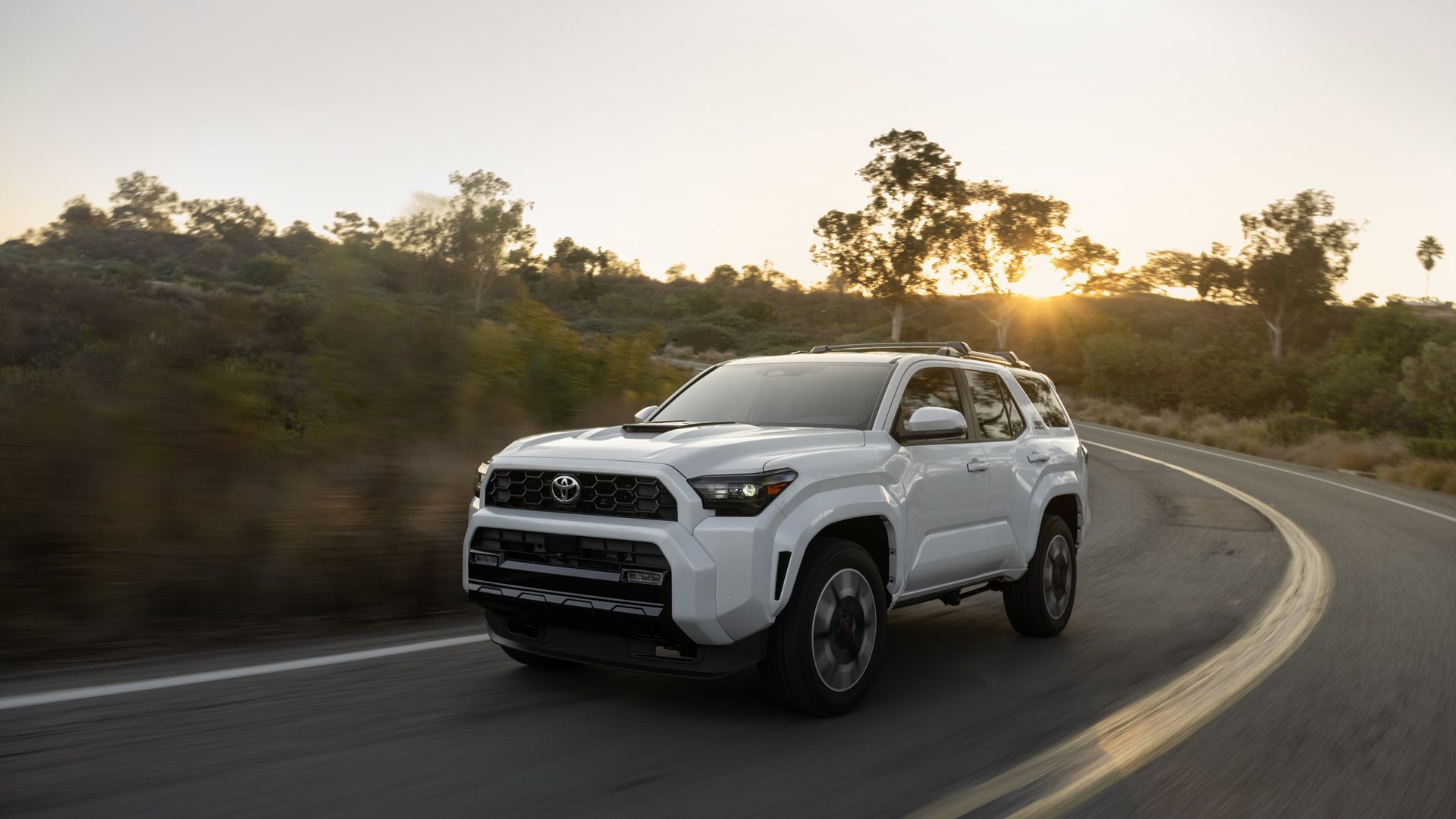
If you’re shopping the 2026 Toyota 4Runner in Nova Scotia and towing a boat, trailer, or camper is part of the plan, the “up to 6,000 lbs (2,722 kg)” line in the brochure raises a fair question: up to for which engine? The 4Runner comes with two distinct powertrains, and they don’t tow the same amount.
This matters more here than in most provinces. Between hauling a boat to the South Shore or a trailer up the Cabot Trail, and driving on gravel and rural routes the rest of the year, the powertrain you pick changes what the 4Runner can do for you day to day.
Gas i-FORCE vs Hybrid i-FORCE MAX at a Glance
|
Spec |
Gas i-FORCE |
Hybrid i-FORCE MAX |
|
Horsepower |
278 hp |
326 hp |
|
Torque |
317 lb-ft |
465 lb-ft |
|
Max towing |
6,000 lbs (2,722 kg) |
5,800 lbs (2,631 kg) |
|
Seating |
Up to 7 |
5 |
|
Fuel economy (combined) |
11.2 L/100km |
9.9 L/100km |
|
Payload |
1,230 lbs (558 kg) |
1,195 lbs (542 kg) |
Both engines start from the same 2.4L turbocharged four-cylinder, paired with an 8-speed automatic and 4WD (on-demand or full-time, depending on grade). The hybrid adds an electric motor for extra torque; the gas engine stands alone.
What “Up to 6,000 Lbs (2,722 kg)” Really Means
The 6,000 lbs (2,722 kg) figure belongs to the gas i-FORCE powertrain. It’s the strongest tow rating in the 4Runner lineup, and it’s the number to look at if you’re regularly pulling a heavy trailer or boat.
The hybrid i-FORCE MAX tows less, at 5,800 lbs (2,631 kg), despite producing more horsepower and considerably more torque, 465 lb-ft against 317 lb-ft. That gap tells you the two powertrains are built for different jobs, not that one is simply better than the other.
Both share the TNGA-F platform, the same body-on-frame architecture underneath the Tacoma, Land Cruiser, Tundra, and Sequoia. The shared foundation, transmission, and 4WD hardware mean the towing difference comes down to how each engine delivers its power, not to two unrelated trucks wearing the same badge.
Think of “up to” as a ceiling reached under the right conditions, at the top of the gas lineup’s capability, not a number every 4Runner grade guarantees.
Cabin Layout: Five Seats or Seven
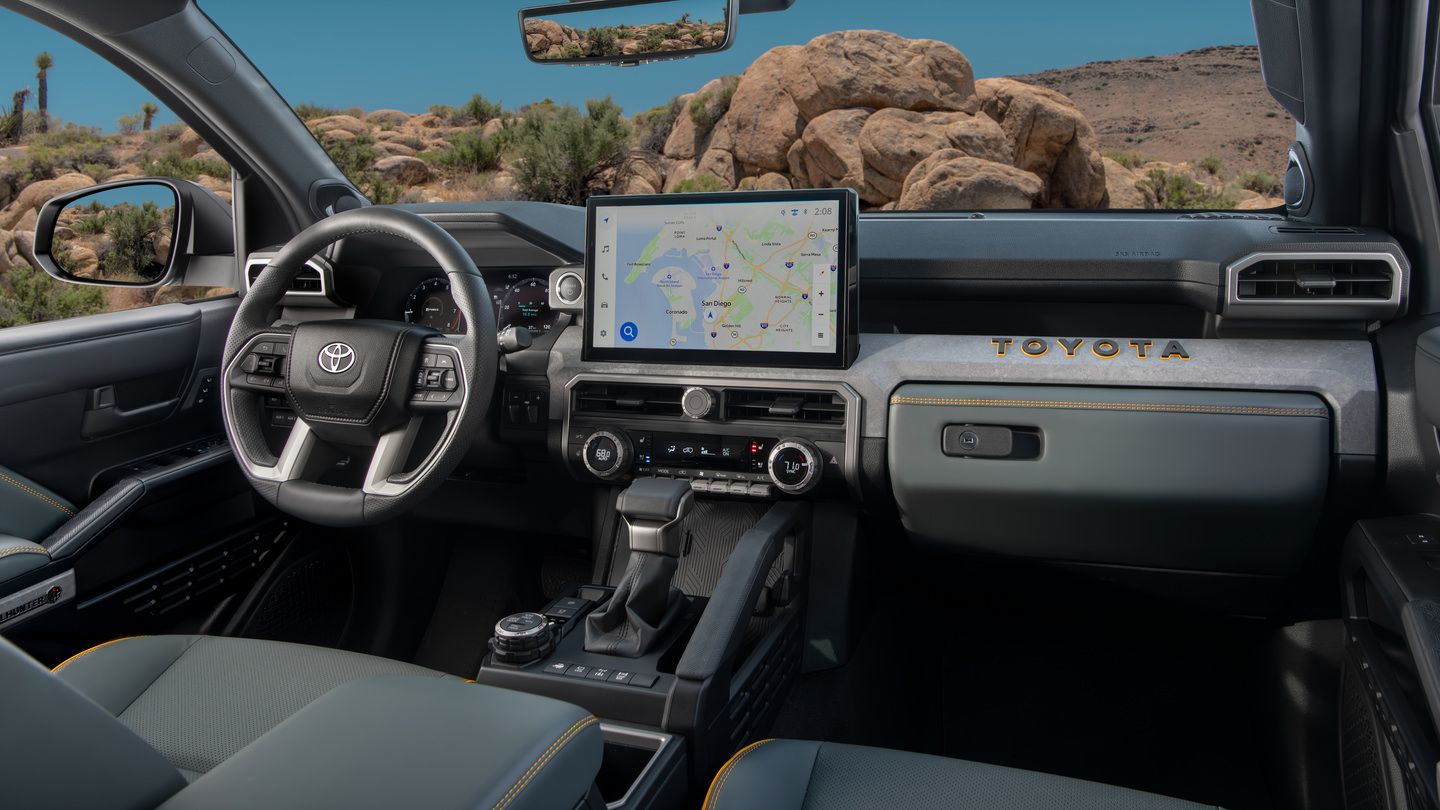
The gas i-FORCE powertrain is the one that opens the door to a seven-passenger cabin, offered on grades like SR5 and Limited, with 343 L of cargo space behind the third row when all seats are in use.
Fold that third row down and cargo behind the second row grows to 1,269 L; fold everything and it reaches 2,381 L behind the front seats.
Every i-FORCE MAX hybrid grade in the lineup is a two-row, five-passenger layout instead. Cargo runs 1,206 L behind the rear seats and 2,339 L with them folded, close to the gas figures but without the third-row option.
For a family that occasionally needs a third row, that’s a real trade-off against the hybrid’s extra torque, not a minor footnote.
4WD, Suspension and Rural Confidence
Both powertrains ride on the same 4WD foundation, with on-demand or full-time systems depending on grade, plus Drive Mode Select and, on off-road-focused trims, a locking rear differential and Multi-Terrain Monitor. Approach and departure angles hold steady at 18 and 23 degrees across the lineup.
Suspension hardware varies by grade rather than by powertrain. Bilstein shocks appear on TRD Off Road Premium models, while FOX shocks and Old Man Emu shocks show up on the TRD Pro and Trailhunter, both built on the hybrid powertrain. For gravel roads, muddy driveways, and a Nova Scotia winter, that combination of 4WD and grade-specific suspension tuning matters more than which engine sits under the hood.
Fuel capacity holds at 72 L for both powertrains. The hybrid’s better combined rating, 9.9 L/100km against 11.2 L/100km for the gas engine, stretches that tank further, useful on longer rural stretches where fuel stops are spread out.
Which 4Runner Powertrain Fits Your Towing Habits?
If towing a heavier trailer or boat is a regular part of your routine, the gas i-FORCE’s 6,000 lbs (2,722 kg) rating and available seven-passenger cabin make it the practical starting point. It’s also the simpler mechanical package, without a hybrid battery to think about.
If your towing is occasional and lighter, and you’d rather have 465 lb-ft of torque and better fuel economy for daily driving, the i-FORCE MAX hybrid earns its place, especially if you don’t need the third row. Its five-passenger cabin suits couples, small families, and drivers who prioritize daily performance over maximum trailer weight.
Neither engine is the wrong choice. The decision comes down to how often you tow, how heavy the load is, and whether you need that extra row of seats more than the extra torque.
Test-Driving the 2026 4Runner in Amherst
The 2026 4Runner splits its lineup around two clear priorities: maximum towing and seating flexibility on the gas i-FORCE, or torque-rich performance and better fuel economy on the i-FORCE MAX hybrid. Both share the same 4WD-capable, TNGA-F foundation underneath.
Visit Amherst Toyota in Amherst to sit in both the gas and hybrid 4Runner, talk through your towing needs with the team, and find the powertrain that matches how you actually drive in Nova Scotia.